
By George Makoni
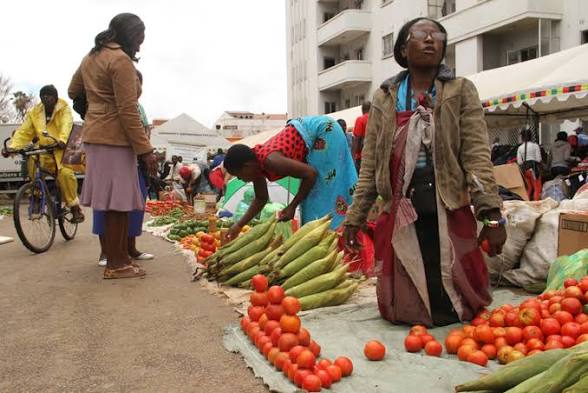
The Government may be walking into a political and social minefield by seeking to remove vendors from undesignated areas, beginning with Harare. Local Government and Public Works Minister Daniel Garwe has given vendors operating in undesignated areas until 9 September 2026 to vacate, warning of a “comprehensive, zero-tolerance clean-up operation.”
Government is right to demand clean cities, functioning pavements and orderly trading spaces. But there is a bigger question that cannot be swept away with the vendors: where do the people go?
Vending is no longer simply about selling tomatoes, airtime, clothes or vegetables on the streets. For millions of Zimbabweans, it has become a survival strategy in an economy that has failed to generate sufficient formal employment and productive opportunities.
High unemployment, a weak and volatile currency, an unfavourable trade imbalance, declining industrial productivity and the shrinking purchasing power of ordinary citizens have pushed many into the informal economy. The vendor is often not there because he or she prefers the pavement. The pavement is simply where the economy has left them.
Remove the vendor without creating an alternative livelihood and Government is not merely clearing a street. It is clearing someone’s source of school fees, rent, food and hope.
There is also a striking political irony. Vendors have become an important constituency of the ruling party, particularly in places such as Mbare, Epworth and Chitungwiza, with groups such as Vendors for ED openly mobilising political support for the President. The same constituency that has been courted politically could now feel abandoned economically.
Government risks putting hot chilli in its own eye.
The comparison with land reform may sound provocative, but the underlying principle is worth considering. For many Zimbabweans, vending represents their small piece of economic space in a country where formal opportunities have become increasingly inaccessible. To suddenly take it away without a credible alternative may feel like reversing the logic of empowerment itself like trying to take a bone already firmly lodged in a dog’s mouth.
Zimbabwe has seen this movie before.
Operation Murambatsvina demonstrated that demolishing informal livelihoods does not automatically eliminate poverty or informality. Instead, it left deep social and political scars and became one of the defining moments in the deterioration of the Mugabe government’s relationship with many urban citizens.
Government should therefore be careful not to underestimate the political consequences of today’s decision.
It may be true that the opposition is currently fragmented and that civil society lacks the mobilisation capacity it once possessed. But grievance has its own organising power.
Nobody needs to conscientise a hungry person about hunger.
The stomach does the conscientising.
As historian LCB puts it, “by taking this stance, the Government is battering the hope of millions of Zimbabweans with a scented smile.”
The danger is not necessarily some dramatic uprising. It is something more fundamental: citizens gradually losing faith in a government they believe is closing the few doors through which they survive.
There is an uncomfortable echo of the colonial-era attitude in saying, “We have the guns; they do not.” But modern governments cannot govern sustainably through coercive power alone. Legitimacy is built when citizens believe that government understands their pain.
The answer is not to romanticise illegal vending. Zimbabwe needs clean cities, safe pavements, sanitation and properly regulated trading spaces. But order without livelihoods is merely neat-looking poverty.
Government should formalise rather than criminalise; designate affordable trading spaces rather than simply demolish livelihoods; provide basic infrastructure and finance; and create pathways for vendors to graduate into sustainable businesses.
If Government genuinely wants fewer vendors, it must create more jobs, more producers and more productive enterprises.
Otherwise, the streets may be cleared, but the grievance will remain.
And history has a stubborn habit of turning today’s administrative decision into tomorrow’s political lesson.
Disclaimer-George Makoni is a human rights activist and writes in his own personal capacity and not on behalf of any organisation or institution.
Contact: chiefmakoni@gmail.com