
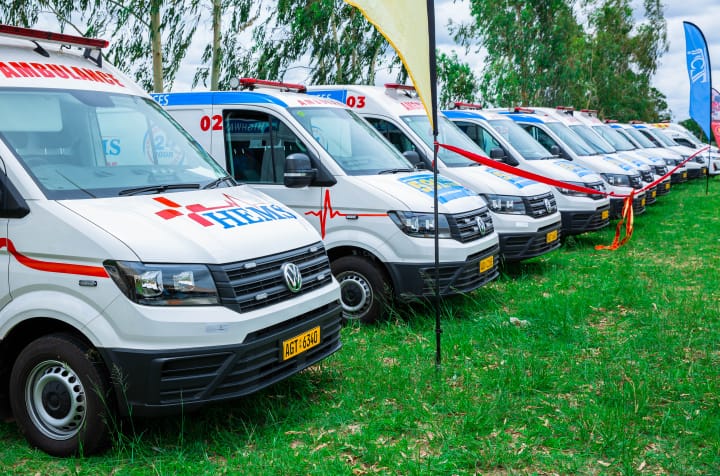
The Ultimate HEMS Guide to Road Safety: Shared Streets, Shared Lives
Roads are a complex ecosystem where drivers, passengers, pedestrians, and cyclists constantly interact. A single mistake by one user can ripple through the system and affect everyone else.
To navigate safely, adopt the HEMS framework: Hazard Awareness, Empathy & Respect, Mindful Behaviour, and Signals & Visibility. Here is how every road user can apply HEMS to protect themselves and others.

1. Drivers: The Heavyweights of the Road
Because motor vehicles carry the greatest potential for harm, drivers hold the highest responsibility for maintaining a safe environment.
-
H – Hazard Awareness: Scan constantly, not just at the bumper ahead. Watch for pedestrians stepping out from between parked cars, cyclists in blind spots, or sudden braking up ahead.
-
E – Empathy & Respect: Remember that cyclists and pedestrians are vulnerable road users with no metal cage to protect them. Give cyclists at least 3 feet (1.5 meters) of clearance when passing.
-
M – Mindful Behaviour: Eliminate distractions. Texting, adjusting the infotainment system, or driving while tired drastically increases reaction times. Drive at a speed appropriate for conditions, not just the posted limit.
-
S – Signals & Visibility: Use turn signals well in advance, keep headlights on during low-light conditions, and ensure all brake lights and indicators are functional.
2. Passengers: The Active Co-Pilots
Passengers often view themselves as passive bystanders, but their actions directly influence the safety of the vehicle and those outside it.
-
H – Hazard Awareness: Be an extra set of eyes for the driver. Gently alert them to hazards they might miss, such as a pedestrian crossing in a dark area or a cyclist coming alongside.
-
E – Empathy & Respect: Respect the driver’s need to concentrate. Avoid loud, sudden outbursts, erratic movements, or engaging in heated arguments that pull the driver’s focus from the road.
-
M – Mindful Behaviour: Always wear a seatbelt, no matter how short the trip or where you are seated. Before opening car doors into traffic or bike lanes, practice the “Dutch Reach” (using the hand furthest from the door) to look back for oncoming cyclists.
-
S – Signals & Visibility: Ensure you don’t block the driver’s view through the rearview or side mirrors with large items or improper seating.
3. Pedestrians: The Most Vulnerable Users
Pedestrians are completely exposed, making situational awareness their strongest line of defence.
-
H – Hazard Awareness: Never assume a driver or cyclist sees you, even if you are on a designated crosswalk. Always make eye contact before stepping into the street.
-
E – Empathy & Respect: Use designated crossing points, crosswalks, and pedestrian bridges whenever available rather than jaywalking unexpectedly into fast-moving traffic.
-
M – Mindful Behaviour: Put away mobile phones and remove headphones or lower the volume while crossing streets. Stay alert to reversing vehicles in parking lots and driveways.
-
S – Signals & Visibility: Make yourself seen. Wear bright or reflective clothing at night, and carry a flashlight or use your phone’s light in unlit areas.

4. Cyclists: The Agile Navigators
Cyclists share the road with much larger, faster vehicles while relying on agility and personal alertness to stay safe.
-
H – Hazard Awareness: Keep a lookout for opening car doors (“dooring”), potholes, gravel, and wet railroad tracks. Anticipate vehicle movements, especially at intersections where drivers may turn across your path.
-
E – Empathy & Respect: Yield to pedestrians on sidewalks and crosswalks. Follow traffic laws—stop at red lights and stop signs just as a motor vehicle would.
-
M – Mindful Behaviour: Always wear a properly fitted helmet. Avoid wearing headphones while riding so you can hear approaching vehicles and ambient traffic cues.
-
S – Signals & Visibility: Use hand signals early to communicate turns and stops. Equip your bike with a white front light, a red rear light, and reflectors, especially when riding in low light.
Quick HEMS Summary Matrix
| Road User | Primary Focus | Key Safety Action |
| Drivers | Space & Speed Control | Give cyclists clearance and put away distractions. |
| Passengers | Co-pilot Responsibility | Use the Dutch Reach before opening doors; wear seatbelts. |
| Pedestrians | Active Alertness | Make eye contact before crossing; avoid distraction. |
| Cyclists | Predictability | Obey traffic signals, signal turns, and use lights at night. |
The Takeaway: Safety on the road isn’t about claiming your right-of-way; it’s about mutual protection. By practicing the HEMS guide every time you step outside, you contribute to a safer, more respectful transit culture for everyone.