

By Nigel Pfunde
HARARE— The Zimbabwe Parks and Wildlife Management Authority (Zimparks) has overhauled its commercial operations, moving away from the traditional model of promoting standalone destinations to developing interconnected tourism circuits across the country.
The strategic shift is designed to encourage longer visitor stays, increase spending and broaden the commercial reach of Zimbabwe’s natural assets instead of relying on isolated attractions that result in brief stopovers.
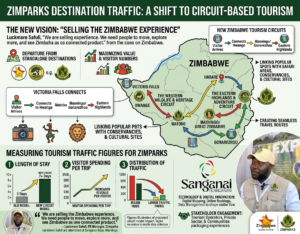
Speaking to Express Mail Zim on the sidelines of the ongoing 19th edition of the Sanganai/Hlanganani/Dzimbahwe World Tourism Expo in Masvingo Wednesday, Zimparks Public Relations Manager Luckmore Safuli said the authority’s new direction is guided by the need to maximize value from the country’s parks and wildlife estate.
“The idea is not to sell individual destinations,” Safuli said.
“We are selling the Zimbabwe experience.”
He explained that for years, marketing efforts focused heavily on flagship attractions like Victoria Falls and Hwange National Park as separate products. While those destinations remain central, Safuli that the piecemeal approach limited the sector’s ability to grow visitor numbers and length of stay.
“When a tourist only comes for one park and then leaves, we are not fully benefiting as a country,” he said.
“We need people to move, to explore more, and to see Zimbabwe as one connected product.”
Under the new circuit framework, Zimparks is linking popular destinations such as Victoria Falls and Hwange with surrounding safari areas, conservancies and cultural sites to create seamless travel routes. Safuli said the circuits will bundle wildlife, adventure, heritage, and community experiences into packaged itineraries. For example, a visitor to Victoria Falls could be routed through Hwange, then to Matobo, Gonarezhou, and the Eastern Highlands within one trip.
“We are connecting the dots,” Safuli explained. “If someone lands in Victoria Falls, why should they not also experience Hwange, the birdlife, the culture, and the landscapes along the way? That is the Zimbabwe experience we want to market.”
He added that the model also helps to spread tourism revenue beyond the major hubs. According to Safuli, the goal is to ensure that smaller parks and surrounding communities also benefit commercially from increased traffic.
The PR Manager said Zimparks is already engaging tourism operators, transport providers and local communities to package the circuits and improve infrastructure along the routes.
“We can not do this alone. We need the private sector to come on board with products, accommodation and activities that fit into these circuits,” he said. “Communities must also be part of it so that they see tangible benefits from conservation.”
Safuli emphasized that longer stays translate directly into more jobs, more revenue for conservation and more opportunities for rural economies.
The shift aligns with the national tourism strategy and this year’s Sanganai Expo theme of leveraging digital innovation to redesign tourism. Safuli noted that technology will play a key role in promoting the circuits through digital mapping, online booking platforms and data to manage visitor flows.
“Technology will help us tell the story better and make it easier for people to plan a circuit instead of just one destination,” he said.
He reiterated that while Zimbabwe will continue to market its iconic attractions, the future lies in presenting the country as a single, diverse and connected destination.
“We have the animals, we have the landscapes, we have the culture. Now we must package it in a way that keeps people here longer,” Safuli concluded. “That is how we grow tourism and conservation together.”