Tag: Global South

  • China Equips Six Zimbabwean Journalists with AI, Digital Media Skills

    China Equips Six Zimbabwean Journalists with AI, Digital Media Skills

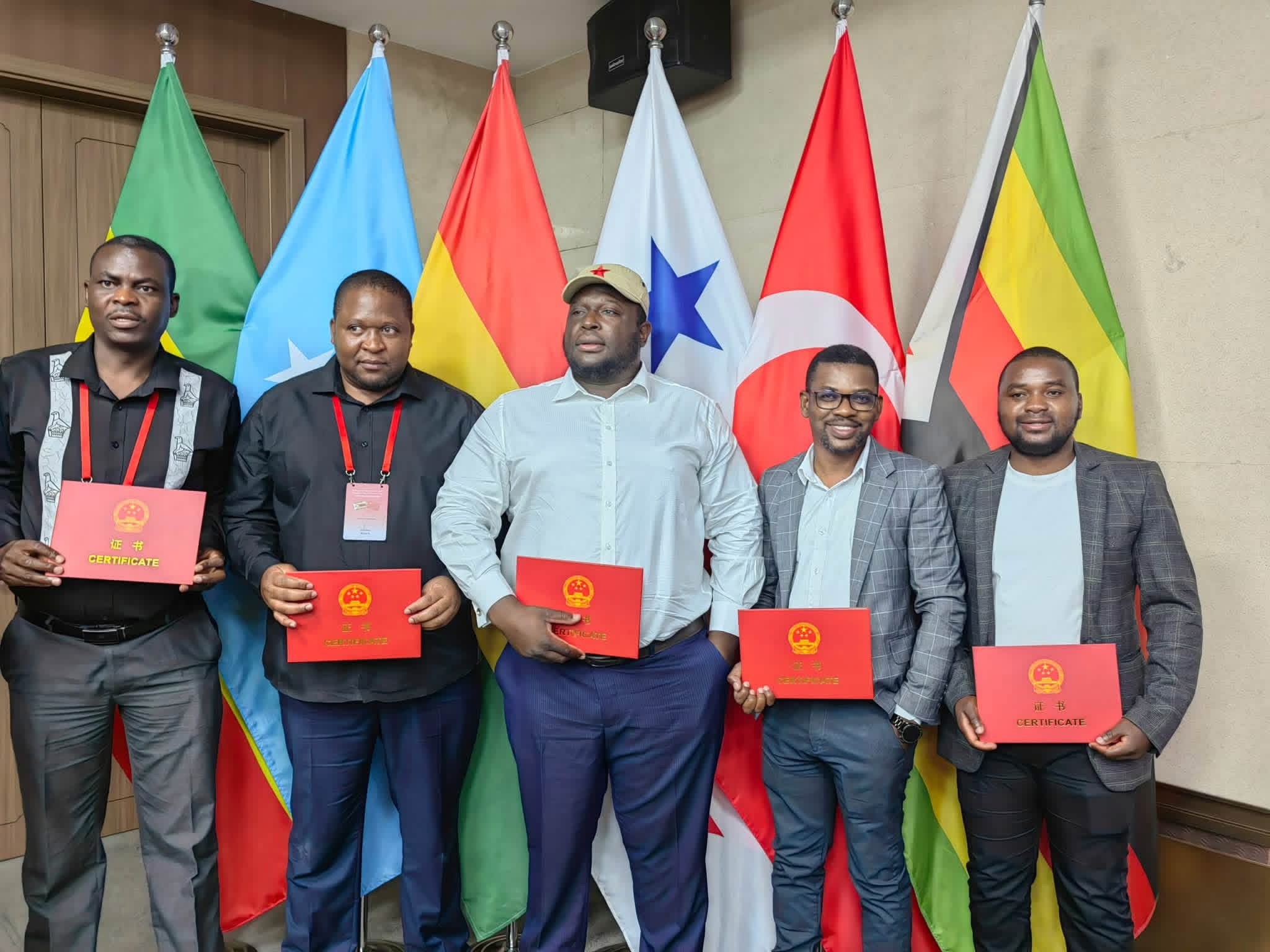
    BEIJING, China – Six Zimbabwean journalists have graduated from the Seminar for News Officials and Journalists from the Global South, completing a two-week programme in China aimed at strengthening media cooperation, advancing digital journalism and enhancing storytelling across developing nations.

    The seminar brought together news officials and journalists from several countries in the Global South to exchange experiences, deepen media collaboration and explore the role of emerging technologies, including artificial intelligence, in transforming journalism and strengthening the voices of developing nations.

    Speaking at the closing ceremony, China Broadcasting International Economic and Technical Cooperation (CBIC) Deputy General Manager, Mr He Dongbo, said relations between China and countries of the Global South had evolved into a long-term strategic partnership built on mutual development and cooperation.

    “We are now more than friends; we are partners walking side by side,” Mr He said.

    “Our cooperation will continue, and CBIC has always been committed to promoting exchanges between China and countries of the Global South.”

    He urged journalists to embrace technological innovation and play a more active role in shaping the international media landscape.

    “Over the past two weeks, we have demonstrated that technology can drive development and reshape international media discourse,” he said.

    “The challenge before us is not only to report on development but to participate in it. We must tell our own stories and enhance our influence on the global stage.”

    Speaking on behalf of the participants, Cambodia’s Deputy Director General of Information and Broadcasting, Mr Choun ChanPrearoun, commended China for strengthening partnerships with developing countries through knowledge-sharing and capacity-building initiatives.

    “We are grateful that China continues to open its doors and foster mutually beneficial partnerships with countries in the Global South,” he said.

    “The knowledge we have gained will help us preserve our cultural heritage and improve the way we tell our stories to the world.”

    Speaking after the graduation ceremony, Takudzwa Brett Karowangoro, Group Deputy News Editor at Hurumende News Hub, Zimbabwe, said the programme had equipped participants with practical skills that would strengthen journalism and support national development.

    “This seminar has broadened our understanding of how artificial intelligence, digital innovation and modern communication technologies are transforming the media industry.

    We are returning home better equipped to tell Zimbabwe’s development story with greater accuracy, innovation and global relevance.”

    Karowangoro said the knowledge gained would contribute to promoting balanced reporting and strengthening cooperation between media organisations across the Global South.

    “The exchange of ideas and experiences has reinforced the importance of collaboration among developing nations.

    As journalists, we have a responsibility to embrace new technologies, uphold professional ethics and ensure our stories reflect the aspirations, achievements and opportunities of our people.

    This experience will inspire us to produce journalism that informs, educates and contributes to national and regional development.”

    For the six Zimbabwean journalists, the graduation marks the completion of specialised training in digital storytelling, artificial intelligence, media technology and international communication, strengthening Zimbabwe’s participation in global media cooperation.

    During the programme, participants attended lectures by Chinese experts, engaged with leading media institutions, explored developments in AI-powered journalism and visited cultural and technological sites to gain practical insights into the application of innovation in journalism, public communication and national development.


  • President Xi’s Global Vision Offers New Hope for Africa

    President Xi’s Global Vision Offers New Hope for Africa

    Chinese President Xi Jinping has used the 105th anniversary of the Communist Party of China (CPC) to highlight Beijing’s growing role in global affairs, presenting China as a champion of peace, development and international cooperation at a time of rising geopolitical tensions and economic uncertainty.

    Speaking at the Great Hall of the People in Beijing on Wednesday, President Xi delivered a speech that placed China’s international influence at the centre of his message, marking a noticeable shift from previous anniversary addresses that largely focused on domestic development and national rejuvenation.

    The Chinese leader said the world was undergoing profound changes that required countries to strengthen cooperation, uphold multilateralism and pursue shared development.

    “As profound changes unseen in a century accelerate across the globe, the world has entered a new period of turbulence and transformation, and humanity stands once again at a crossroads,” President Xi said.

    He called on nations to uphold peace, development, cooperation and mutual benefit while working together to address global challenges.

    President Xi said the Communist Party of China had played a significant role in shaping modern global development.

    “The Communist Party of China has deeply changed the trend and trajectory of the worlds development through relentless struggle,” he said.

    Founded in 1921, the CPC established the People’s Republic of China in 1949 and has since overseen the country’s transformation from a largely agrarian economy into the world’s second-largest economy.

    Today, China accounts for nearly 30 percent of global manufacturing output and has become a major player in international trade, investment and development financing.

    President Xi described the CPC as “the world’s largest ruling party with significant global influence,” emphasizing China’s growing role in global governance and international cooperation.

    His remarks are particularly significant for Africa, where China has emerged as one of the continent’s largest trading partners and development partners over the past two decades.

    Chinese investment has supported infrastructure projects across Africa, including roads, railways, power stations, airports, dams and industrial parks.

    In Zimbabwe, Chinese companies have invested in mining, energy, manufacturing, agriculture and infrastructure development, helping to expand productive capacity and improve connectivity.

    For many African countries, President Xi’s message of cooperation and shared development aligns with efforts to accelerate industrialisation, improve infrastructure and create employment opportunities.

    The Chinese leader said China would continue promoting initiatives aimed at strengthening international cooperation, including the Global Development Initiative, the Global Security Initiative and the Global Civilization Initiative.

    These initiatives seek to address common challenges such as poverty, food insecurity, climate change, economic inequality and global instability.

    President Xi said China’s development experience had created opportunities for other developing countries seeking alternative pathways to economic transformation.

    “Today, as the Party leads the people in advancing Chinese modernisation, we have created a new form of human advancement and expanded the pathways to modernisation for developing countries,” he said.

    For many African nations, China’s rapid economic growth and industrial transformation provide important lessons on infrastructure development, manufacturing growth and poverty reduction.

    President Xi also stressed the importance of global stability and security, noting that development and peace are closely linked.

    “A strong country must have a strong military, and only a strong military can ensure national security,” he said.

    China remains the world’s second-largest military spender and has increasingly participated in United Nations peacekeeping operations, including missions in Africa.

    The Chinese leader also reiterated Beijing’s position on Taiwan, opposing what he described as “Taiwan independence” and external interference in the issue.

    He said resolving the Taiwan question remained the Communist Party’s historical responsibility while calling for continued stability in Hong Kong and Macau.

    For African countries, China’s emphasis on sovereignty, territorial integrity and non-interference in domestic affairs continues to resonate strongly.

    Many African governments have traditionally supported these principles and have often called for greater representation of developing nations within international institutions.

    Zimbabwe, which is preparing to assume a non-permanent seat on the United Nations Security Council, may find particular relevance in President Xi’s emphasis on dialogue, multilateralism and peaceful coexistence.

    As geopolitical tensions, climate challenges and economic pressures continue to affect developing countries, China’s role in Africa is expected to remain significant.

    For many African nations, President Xi’s speech represents not only China’s vision for the future international order but also a reaffirmation of Beijing’s commitment to partnerships with the Global South.

    As the world enters what President Xi described as a “new period of turbulence and transformation”, Africa is increasingly becoming an important player in global affairs, with China positioning itself as one of the continent’s key strategic partners in development, trade and international cooperation.